Cortagen, 20mg
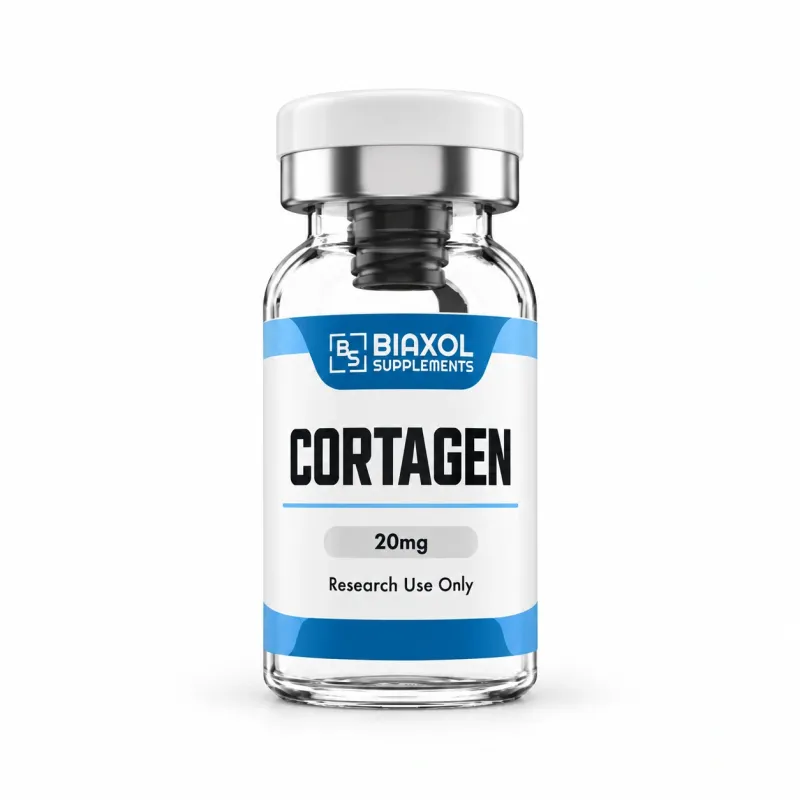
Cortagen, 20mg
Cortagen is a synthetic bioregulatory peptide investigated for its activity in neural tissue models and associated cellular signalling pathways.
-25% on everything – until October 31
25% off regular prices, replacing other product sales. Only the crypto payment discount can be combined.
Overview
Cortagen is a synthetic bioregulatory peptide investigated for its activity in neural tissue models and associated cellular signalling pathways. Research interest centers on its reported effects on neuroinflammatory signalling, oxidative stress regulation, and cellular homeostasis.
Experimental studies have examined its influence on cytokine expression, antioxidant defence mechanisms, and stress-response pathways, with additional investigations extending to immune and cardiac tissue models. Research applications include bioregulatory peptide research, neuroinflammatory pathway investigation, oxidative stress studies, and comparative peptide pharmacology.
- High Purity – 99% Purity Guaranteed
- Independently Lab Tested
- Research Grade Quality
- For Laboratory Research Use Only
Properties
| Chemical Formula | C17H27N5O8 |
|---|---|
| Synonyms | SCHEMBL5491754 |
| Molar Mass | 430.17 g/mol |
| PubChem CID | 44318296 |
| Total Compound Content | 20mg per vial |
| Shelf Life | 36 months |
Research
Cortagen is studied for its proposed modulatory effects on inflammatory signalling pathways and oxidative stress regulation in neural tissue models. Experimental research has examined its influence on cytokine expression, antioxidant defence systems, and cellular stress-response pathways, with particular interest in maintaining the balance between oxidative and antioxidative processes. Additional studies have evaluated reported effects on interleukin-2 (IL-2) expression and related signalling networks relevant to immune-regulation research. Ongoing investigations utilize neural tissue culture systems and rodent models of neuroinflammatory and ischemic challenge to characterize pathway-specific effects and bioregulatory peptide activity. Independently third-party HPLC-tested; COA available per batch.FAQ
What neural tissue models are used to study Cortagen's effects on oxidative-antioxidative balance?
Neuronal and glial cell culture models, often combined with an oxidative stress challenge (such as hydrogen peroxide or glutamate excitotoxicity exposure), are standard systems for studying Cortagen's reported effects on the oxidative-antioxidative balance in neural tissue. Readouts typically include measurement of reactive oxygen species levels, lipid peroxidation markers, and antioxidant enzyme activity (such as superoxide dismutase or glutathione peroxidase) following compound exposure under the oxidative challenge condition.
How is Cortagen's reported effect on interleukin-2 expression studied in immune signaling research?
Lymphocyte culture models, typically using mitogen-stimulated peripheral blood mononuclear cells or isolated T-cell populations, are used to measure interleukin-2 expression by ELISA or qPCR following Cortagen exposure, allowing researchers to quantify the magnitude and time-course of any observed cytokine expression change. This readout is studied in the context of broader autoimmune and immune regulatory signalling research, often alongside other cytokine markers to build a more complete profile of Cortagen's immunomodulatory activity.
What rodent models are used to investigate Cortagen's relevance to neuroinflammatory and ischemic response research?
Rodent models of cerebral ischemia (such as transient or permanent middle cerebral artery occlusion) and neuroinflammatory challenge paradigms (such as LPS-induced neuroinflammation) are used to study Cortagen's effects in an intact neural tissue context, typically measuring infarct volume, neurological functional scores, and tissue-level inflammatory cytokine or oxidative stress markers as primary endpoints. These in vivo models complement cell-based mechanistic studies by situating Cortagen's pathway-specific effects within a physiologically relevant injury context.