Thymogen 20mg
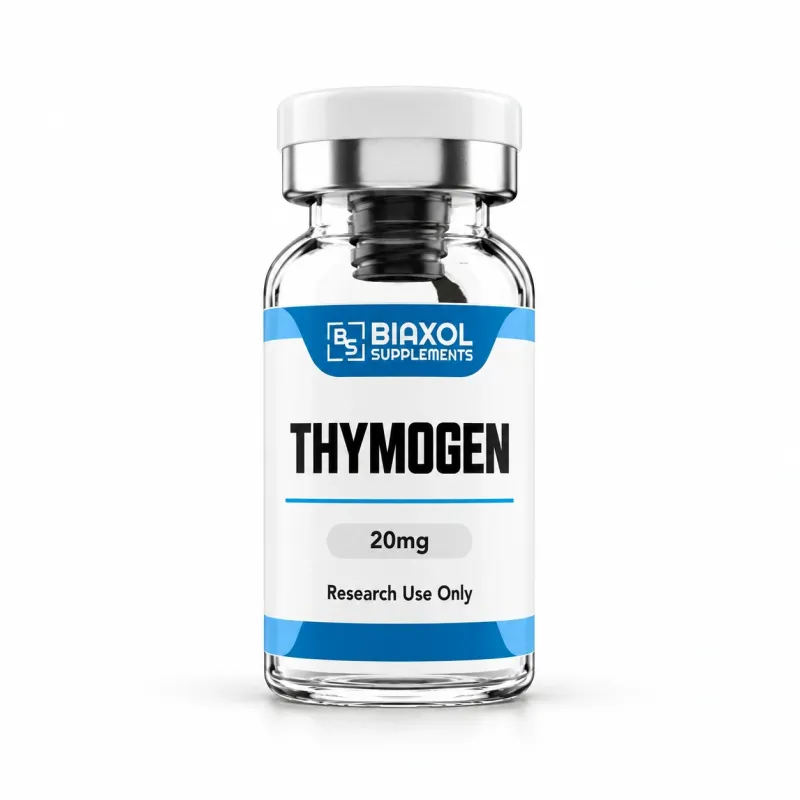
Thymogen 20mg
Thymogen is a synthetic bioregulatory peptide studied for its activity in immune system modulation research models.
-25% on everything – until October 31
25% off regular prices, replacing other product sales. Only the crypto payment discount can be combined.
Overview
Thymogen is a synthetic bioregulatory peptide studied for its activity in immune system modulation research models. Research has examined its proposed capacity to enhance T-cell production and differentiation, stimulate interferon secretion, elevate cyclic nucleotide levels, and support innate immune pathway signalling in experimental settings.
Research applications include immune modulation pathway studies, T-cell differentiation research, and comparative bioregulatory dipeptide pharmacology.
- High Purity – 99% Purity Guaranteed
- Independently Lab Tested
- Research Grade Quality
- For Laboratory Research Use Only
Properties
| Chemical Formula | C16H19N3O5 |
|---|---|
| Synonyms | Oglufanide, Thymogen |
| Molar Mass | 333.34 g/mol |
| CAS Number | 38101-59-6 |
| PubChem CID | 100094 |
| Total Compound Content | 20mg per vial |
| Shelf Life | 36 months |
Research
Thymogen is studied as a synthetic bioregulatory peptide with proposed activity in immune system modulation research. Research models have examined its proposed capacity to enhance T-cell production and differentiation, stimulate interferon secretion, and elevate cyclic nucleotide levels relevant to innate immune pathway signalling in experimental systems. Thymogen has also been investigated within research models examining its potential influence on cellular recovery processes, immune resilience under experimental stress conditions, and cardioprotective mechanism research. Independently third-party HPLC-tested; COA available per batch.FAQ
What T-cell differentiation assays are used to study Thymogen's proposed immune modulation activity?
Flow cytometry-based immunophenotyping of T-lymphocyte populations (measuring CD3, CD4, CD8 and differentiation markers) is a standard method for studying Thymogen's proposed effects on T-cell production and differentiation in cell-based and ex vivo immune cell models, typically comparing treated versus untreated lymphocyte preparations across a defined exposure period. These assays allow researchers to quantify shifts in T-cell subpopulation distribution associated with compound exposure.
How is Thymogen's proposed effect on cyclic nucleotide levels measured in immune cell research?
Enzyme immunoassay or mass spectrometry-based quantification of cyclic AMP and cyclic GMP levels in immune cell preparations (such as isolated lymphocytes or macrophage cell lines) is used to study Thymogen's proposed effects on cyclic nucleotide signalling, typically measured at defined timepoints following compound exposure. These molecular readouts are often paired with downstream functional immune assays (such as interferon secretion measurement via ELISA) to connect cyclic nucleotide changes to broader immune pathway outcomes.
What experimental stress models are used to study Thymogen's proposed role in immune resilience research?
Immune cell models subjected to defined stress challenges (such as oxidative stress, nutrient deprivation, or pathogen-associated molecular pattern exposure) are used to study Thymogen's proposed contribution to immune resilience, typically measuring cell viability, cytokine production profiles, and functional immune readouts under stress conditions with and without compound exposure. These stress-challenge models allow researchers to characterise whether Thymogen's immune-modulating effects are most relevant under experimentally induced immune stress.