Sermorelin, 2mg
Sermorelin, 2mg
Sermorelin (GRF 1–29) is a synthetic 29-amino-acid fragment of endogenous GHRH(1–44), representing the minimal active sequence required for full GHRHR agonist activity.
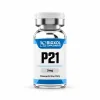
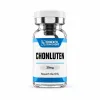
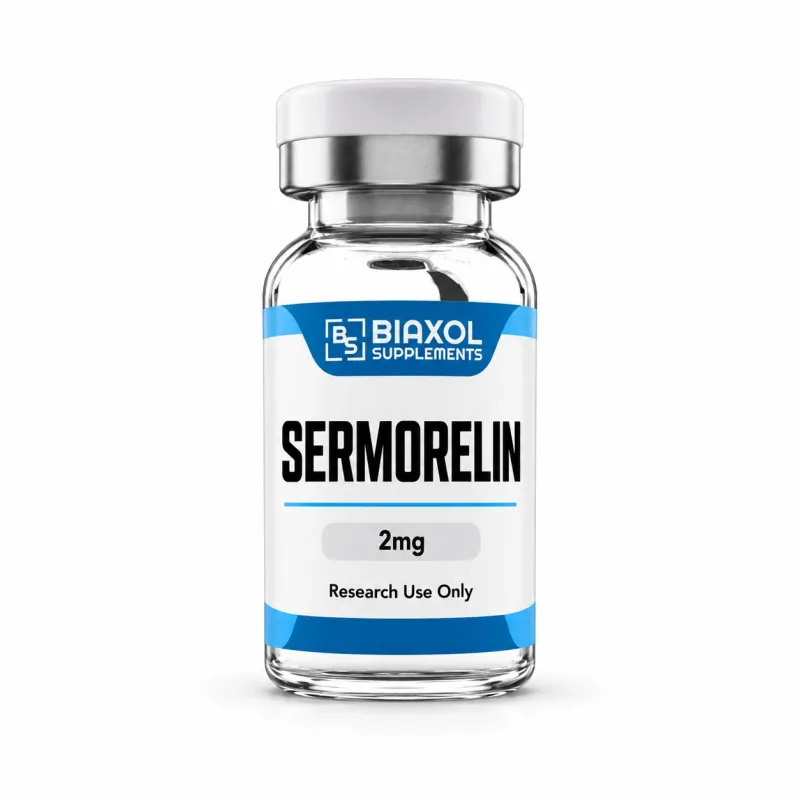
The image represents one available format. Strength and pack size are those selected above.
-25% on everything – until October 31
25% off regular prices, replacing other product sales. Only the crypto payment discount can be combined.
Overview
Sermorelin (GRF 1–29) is a synthetic 29-amino-acid fragment of endogenous GHRH(1–44), representing the minimal active sequence required for full GHRHR agonist activity. GHRHR binding activates Gsα-coupled adenylyl cyclase, stimulating pulsatile GH release from anterior pituitary somatotrophs. Research applications include GHRHR pharmacology, somatotropic axis characterisation, and comparative GHRH analogue potency studies.
- High Purity – 99% Purity Guaranteed
- Independently Lab Tested
- Research Grade Quality
- For Laboratory Research Use Only
Properties
| Chemical Formula | C151H250N44O44S |
|---|---|
| Synonyms | UNII-89243S03TE, 89243S03TE, Sermoreline, Sermorelinum, Growth Hormone Releasing Factor (GRF) (1-29) amide |
| Molar Mass | 3417.9 g/mol |
| CAS Number | 114466-38-5 |
| PubChem CID | 16132412 |
| Available formats | Vial · KIT (10 vials) |
| Shelf Life | 36 months |
Research
Sermorelin is a synthetic 29-amino-acid peptide corresponding to the biologically active N-terminal region of growth hormone-releasing hormone (GHRH). The first 29 amino acid residues contain the structural elements required for high-affinity interaction with the growth hormone-releasing hormone receptor (GHRHR), making Sermorelin a widely utilized reference compound in GHRHR pharmacology research. Receptor activation initiates Gsα-coupled signaling, resulting in intracellular cAMP generation, protein kinase A (PKA) activation, and downstream signal transduction events associated with GHRHR-mediated pathway activity. Due to its well-characterized structure and receptor interaction profile, Sermorelin has been extensively employed in investigations of ligand-receptor binding dynamics, receptor activation mechanisms, peptide structure-activity relationships, and comparative analyses of GHRH analogues. Additional research has examined its pharmacokinetic properties, receptor engagement characteristics, and signaling pathway activation relative to modified GHRHR agonists. Research applications include GHRHR pharmacology, receptor signaling studies, peptide engineering investigations, ligand optimization research, and mechanistic evaluation of GHRHR-mediated signal transduction. Supplied as a lyophilized preparation (2 mg/vial). Independently third-party HPLC-tested; COA available per batch.Lab Results
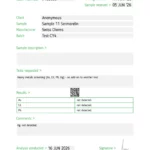
Results refer to the tested sample. Check the batch and date in the report.
FAQ
What is the relationship between Sermorelin and endogenous GHRH?
Sermorelin is a synthetic 29-amino-acid fragment of the first 29 residues of endogenous human GHRH(1–44). Studies established that GHRH(1–29) retains full GHRHR agonist potency relative to the intact 44-residue peptide, as the N-terminal region contains the receptor-binding and activation domain.
Sermorelin is therefore functionally equivalent to GHRH in terms of GHRHR pharmacology, though the shorter length confers a slightly shorter plasma half-life.
How does Sermorelin's half-life compare to other GHRH analogues used in research?
Sermorelin has a plasma half-life of approximately 10–20 minutes due to DPP-IV cleavage vulnerability. Tesamorelin (N-terminal trans-3-hexenoic acid modification) extends this to approximately 26–38 minutes. CJC-1295 without DAC (GRF 1–29) uses substitutions at positions 2, 8, 15, and 27 to provide DPP-IV resistance (t½ ~30 min), and CJC-1295 with DAC covalently binds albumin (t½ ~7–8 days).
Sermorelin's shorter half-life makes it appropriate for studies requiring discrete, acute GH pulse induction.
Why is Sermorelin considered a reference compound in GHRHR research?
Sermorelin possesses one of the most extensively characterized pharmacological profiles among GHRHR agonists, with well-documented receptor binding properties, signaling activity, and ligand-receptor interaction data.
Its defined structure, established receptor affinity, and thoroughly studied activation mechanisms have made it a widely used reference compound for investigations involving GHRHR pharmacology, receptor activation kinetics, structure-activity relationships, and comparative analyses of GHRH analogues.
As a result, Sermorelin is frequently utilized as a benchmark molecule in studies examining receptor signaling, ligand optimization, and GHRHR-mediated signal transduction.