Bromantane, 5 grams Powder
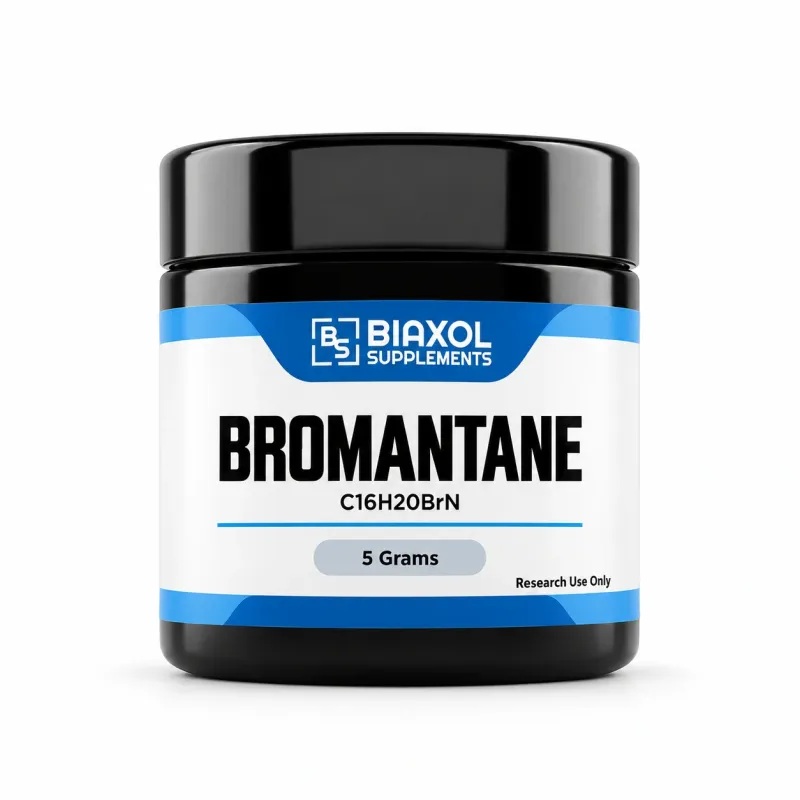
Bromantane, 5 grams Powder
Bromantane (Ladasten) powder (5 g) provides the adamantane-class actoprotector in bulk unencapsulated form for laboratory applications requiring solution preparation, dose titration, or formulation studies.
-25% on everything – until October 31
25% off regular prices, replacing other product sales. Only the crypto payment discount can be combined.
Overview
Bromantane (Ladasten) powder (5 g) provides the adamantane-class actoprotector in bulk unencapsulated form for laboratory applications requiring solution preparation, dose titration, or formulation studies. The compound induces tyrosine hydroxylase and AAAD biosynthetic enzymes, increasing dopaminergic and serotonergic monoamine synthesis.
The powder format enables flexible concentration preparation and is suited to pharmacokinetic studies, in vitro receptor assays, and custom formulation research protocols.
- High Purity – 99% Purity Guaranteed
- Independently Lab Tested
- Research Grade Quality
- For Laboratory Research Use Only
Properties
| Chemical Formula | C16H20BrN |
|---|---|
| Synonyms | Bromantan, Ladasten, N-(4-Bromophenyl)adamantan-2-amine |
| Molar Mass | 306.25 g/mol |
| CAS Number | 87913-26-6 |
| PubChem CID | 4660557 |
| Total Compound Content | 5 g powder |
| Shelf Life | 36 months |
Research
Bromantane powder (5 g) provides the same adamantane-derived compound as the capsule format in bulk unencapsulated form. The powder format is useful for analytical chemistry applications, formulation development, solution-based experimental systems, concentration-response investigations, and studies requiring precise control over compound quantities and preparation parameters. Bromantane has been investigated in relation to monoamine-associated regulatory pathways, transcriptional control mechanisms, intracellular signaling processes, and molecular systems involved in cellular regulation. Experimental studies have also examined its physicochemical properties, formulation characteristics, and structure-function relationships relevant to adamantane-derived compounds. Research applications include monoamine pathway investigation, molecular regulation studies, comparative formulation research, and mechanistic evaluation of adamantane-class pharmacological compounds. Independently third-party HPLC-tested; COA available per batch.Lab Results
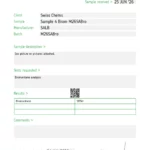
Results refer to the tested sample. Check the batch and date in the report.
FAQ
Why might researchers prefer the powder format for bromantane studies?
The powder format provides greater flexibility for formulation development, analytical investigations, concentration-response studies, and experimental designs requiring precise control over compound quantities and preparation parameters. It is particularly useful for research involving solution preparation, comparative formulation analysis, physicochemical characterization, and studies examining the influence of formulation variables on compound behavior.
What advantages does bromantane powder offer for laboratory research?
Bromantane powder enables direct incorporation into a variety of experimental workflows, including formulation development, analytical chemistry applications, solution-based investigations, and concentration-dependent studies. The bulk format supports research requiring customizable preparation strategies, comparative testing conditions, and detailed evaluation of physicochemical and formulation characteristics.
How is bromantane powder used in comparative research applications?
Bromantane powder is frequently utilized in studies examining formulation-dependent characteristics, concentration-response relationships, molecular properties, and experimental system variables. Its flexibility makes it useful for comparative investigations of compound behavior across different research environments, as well as mechanistic studies involving monoamine-associated regulatory pathways and adamantane-derived molecular systems.
Related products
-
 NSI-189 Phosphate – Powder, 1 gramAdd to cartOriginal price was: €24,99.€18,74Current price is: €18,74.
-
 NSI-189 Free Base – Powder, 1 gramAdd to cartOriginal price was: €22,99.€17,24Current price is: €17,24.