TB-500 Fragment (17-23)
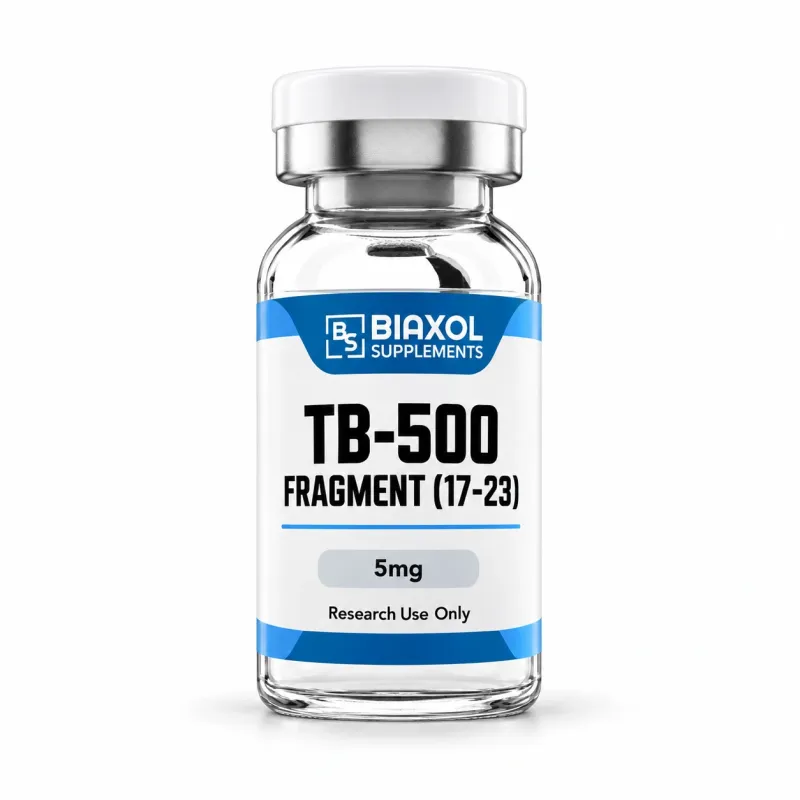
TB-500 Fragment (17-23)
<p><strong>NOTE:</strong> In some cases wherein the assigned top colors are out of stock, a different top color will be used to ensure that your order will not be delayed.</p>
<p><strong>Peptides</strong> are stable at room temperature and can be stored in their original packaging for several days to weeks. For longer storage, keep them at 4 °C or colder, away from intense light. Do not shake peptides before or after reconstitution, refrigerate them, and handle with care.</p>
<p><span style="color: #ff6600"><strong>You can purchase BAC water here:</strong></span><br>
<strong><a href="http://swisschems.local/product/bacteriostatic-water-bac/">BAC 10ml </a></strong></p>
L’image présente un des formats disponibles. Le dosage et le conditionnement correspondent à la sélection ci-dessus.
-25% sur tout – jusqu’au 31 octobre
25% sur les prix habituels, en remplacement des autres soldes. Cumulable uniquement avec la remise crypto.
Présentation
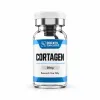
TB-500 Fragment (17-23) is a synthetic research peptide consisting of the key active amino acid sequence from the actin-binding region of thymosin beta-4. Supplied as a high-purity lyophilized powder, it’s used in laboratory research to study cellular migration, actin dynamics, angiogenic signaling, and tissue remodeling processes.
- High Purity – 99% Purity Guaranteed
- Independently Lab Tested
- Research Grade Quality
- For Laboratory Research Use Only
Propriétés
| Chemical Formula | C38H68N10O14 |
|---|---|
| Synonyms | TB-500 Fragment (17-23), Thymosin Beta-4 Fragment 17-23, LKKTETQ |
| Molar Mass | 889.02 g/mol |
| CAS Number | 885340-08-9 |
| PubChem CID | 62707662 |
| Formats disponibles | 5mg 1vial · 10mg 1vial |
| Shelf Life | 36 months |
Recherche
TB-500 Fragment (17-23) is the N-acetylated seven-residue sequence (Ac-Leu-Lys-Lys-Thr-Glu-Thr-Gln) corresponding to the LKKTET actin-binding motif found at position 17–23 of Thymosin Beta-4. Because this short sequence contains the core determinant of Tβ4's interaction with G-actin, it is frequently used in comparative studies examining whether a given cytoskeletal or signaling effect requires the full 43-residue protein or can be reproduced by the isolated binding motif alone.
Experimental work involving this fragment has focused on actin monomer sequestration assays, structure-activity mapping of the Tβ4 actin-binding domain, and mechanistic comparisons between the minimal fragment and full-length Tβ4 in cytoskeletal reorganization models. Because of its small size relative to full-length Tβ4, the fragment is also used in analytical chemistry and mass-spectrometry method development, including doping-control and peptide-identification research.
FAQ
How does TB-500 Fragment (17-23) differ from full-length TB-500/Thymosin Beta-4?
The Fragment (17-23) contains only the seven-residue LKKTET actin-binding motif that sits within the larger 43-residue Tβ4 sequence, rather than the full protein. It is typically used to test whether an observed effect of full-length Tβ4 depends on the whole protein or can be attributed to this minimal actin-binding region alone.
What is the primary research application of this fragment?
It's used mainly in comparative actin-binding and structure-function studies, where researchers assess G-actin interaction and cytoskeletal effects of the isolated motif relative to full-length Thymosin Beta-4. It also sees use in analytical/mass-spectrometry method development for peptide identification.
Is this compound identical to commercial "TB-500"?
The name "TB-500" has been used inconsistently across the peptide supply industry — some vendors apply it to the full 43-residue Tβ4 analogue, while analytical and anti-doping literature identifies "TB-500" specifically as this Ac-LKKTETQ fragment. This listing is the isolated 7-residue fragment (CAS 885340-08-9); check formula and CAS number against any other "TB-500" product before comparing them directly.
Produits similaires
-
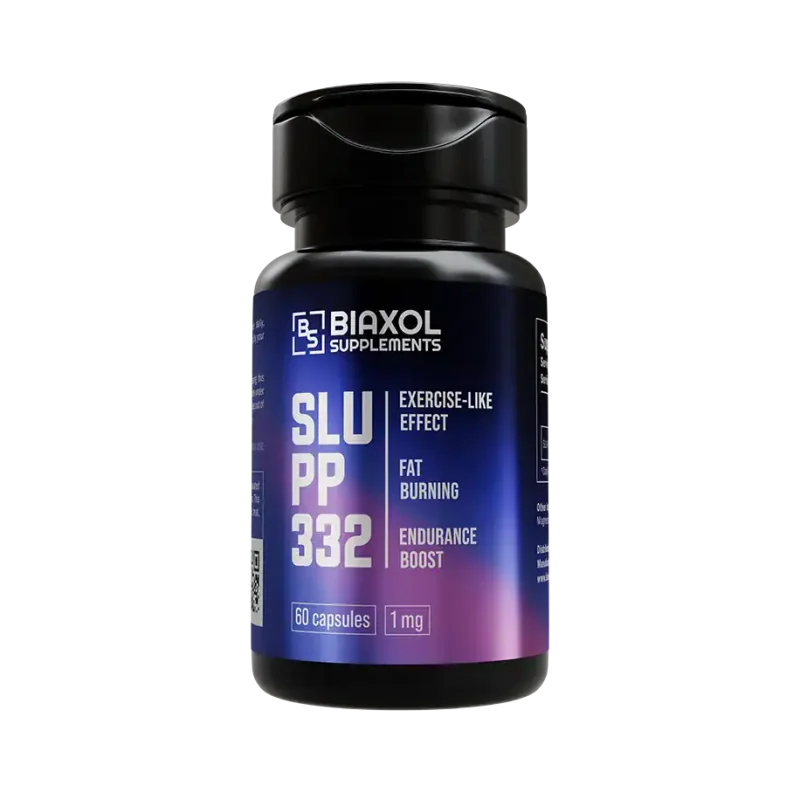 SLU-PP-332 PeptideAjouter au panierLe prix initial était : €100,00.€75,00Le prix actuel est : €75,00.
-
 OS-01 100mg/30capsAjouter au panierLe prix initial était : €220,00.€165,00Le prix actuel est : €165,00.