

Oxytocin
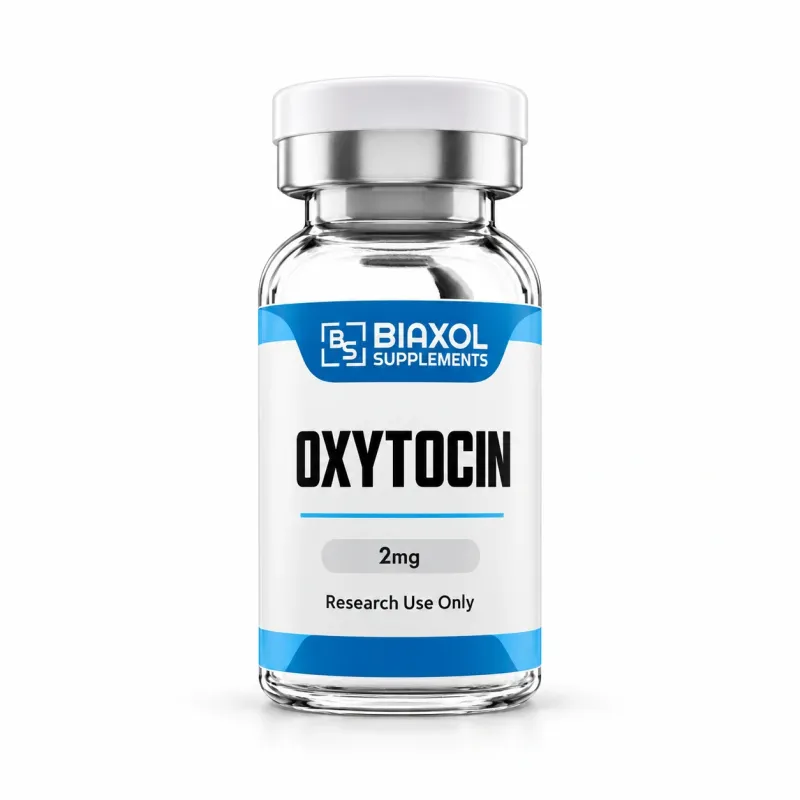
Oxytocin
Oxytocin (Cys-Tyr-Ile-Gln-Asn-Cys-Pro-Leu-Gly-NH₂) is a cyclic nonapeptide characterized by an intramolecular disulfide bond linking residues 1 and 6.
La imagen representa uno de los formatos disponibles. La concentración y el envase corresponden a la selección anterior.
-25% en todo – hasta el 31 de octubre
25% sobre los precios habituales, en sustitución de otras ofertas. Acumulable solo con el descuento crypto.
Descripción
Oxytocin (Cys-Tyr-Ile-Gln-Asn-Cys-Pro-Leu-Gly-NH₂) is a cyclic nonapeptide characterized by an intramolecular disulfide bond linking residues 1 and 6. It functions as a selective agonist at the oxytocin receptor (OXTR), a Gq/11-coupled G protein-coupled receptor that activates phospholipase C signaling, resulting in IP3/DAG generation and intracellular calcium mobilization.
Experimental investigations have examined oxytocin's interactions with neuropeptide signaling networks, receptor-ligand dynamics, intracellular signaling pathways, and molecular communication systems.
Its close structural similarity to vasopressin makes it a valuable research tool for comparative receptor selectivity studies, ligand-binding investigations, and mechanistic evaluation of peptide-mediated signaling pathways.
- High Purity – 99% Purity Guaranteed
- Independently Lab Tested
- Research Grade Quality
- For Laboratory Research Use Only
Propiedades
| Chemical Formula | C43H66N12O12S2 |
|---|---|
| Synonyms | OXT, α-Hypophamine, Oxytocic hormone, Pitocin (trade name) |
| Molar Mass | 1,007.19 g/mol |
| CAS Number | 50-56-6 |
| PubChem CID | 439302 |
| Formatos disponibles | 2mg (1 vial) · 2mg KIT (10 vials) · 5mg (1 vial) · 5mg KIT (10 vials) |
| Shelf Life | 36 months |
Investigación
Oxytocin (Cys-Tyr-Ile-Gln-Asn-Cys-Pro-Leu-Gly-NH₂) is a cyclic nonapeptide characterized by an intramolecular disulfide bond linking residues 1 and 6. It functions as a selective agonist at the oxytocin receptor (OXTR), a Gq/11-coupled G protein-coupled receptor that activates phospholipase C signaling, resulting in IP3/DAG generation and intracellular calcium mobilization. Experimental investigations have examined oxytocin's interactions with neuropeptide signaling networks, receptor-ligand dynamics, intracellular signaling pathways, and molecular communication systems. Its close structural similarity to vasopressin makes it a valuable research tool for comparative receptor selectivity studies, ligand-binding investigations, and mechanistic evaluation of peptide-mediated signaling pathways. Supplied as a lyophilized preparation (5 mg/vial). Independently third-party HPLC-tested; COA available per batch.Resultados de laboratorio
Results refer to the tested sample. Check the batch and date in the report.
FAQ
What is the structural relationship between oxytocin and vasopressin and how does it affect receptor selectivity?
Oxytocin and vasopressin are closely related cyclic nonapeptides that differ by only two amino acid residues while sharing a highly conserved disulfide-bridged structure. Despite this structural similarity, they exhibit distinct receptor interaction profiles across the oxytocin and vasopressin receptor families.
Their close relationship makes them valuable research tools for comparative receptor pharmacology, ligand-receptor interaction studies, receptor selectivity investigations, and structure-function analyses of peptide-mediated signaling systems.
Why is oxytocin useful for receptor pharmacology research?
Oxytocin is a selective agonist of the oxytocin receptor (OXTR), enabling detailed investigation of OXTR-mediated signaling pathways, receptor activation mechanisms, intracellular signaling cascades, and ligand-receptor dynamics. Experimental studies frequently utilize oxytocin to examine Gq/11-coupled GPCR signaling, phospholipase C activation, calcium-mediated regulatory processes, and comparative receptor pharmacology within the neuropeptide receptor family.
What are the primary research applications of the oxytocin receptor (OXTR)?
OXTR serves as a widely studied model for investigating peptide-mediated signaling systems, receptor activation mechanisms, intracellular communication pathways, and GPCR regulatory networks. Experimental investigations have examined OXTR-associated signal transduction processes, ligand-binding characteristics, receptor selectivity, and molecular communication systems.
These characteristics make oxytocin a valuable research tool for studies of receptor pharmacology, peptide signaling, and mechanistic evaluation of neuropeptide-associated regulatory pathways.
Productos relacionados
-
 OS-01 100mg/30capsAñadir al carritoEl precio original era: €220,00.€165,00El precio actual es: €165,00.
-
 SLU-PP-332 PeptideAñadir al carritoEl precio original era: €100,00.€75,00El precio actual es: €75,00.