GHRP-6 5mg
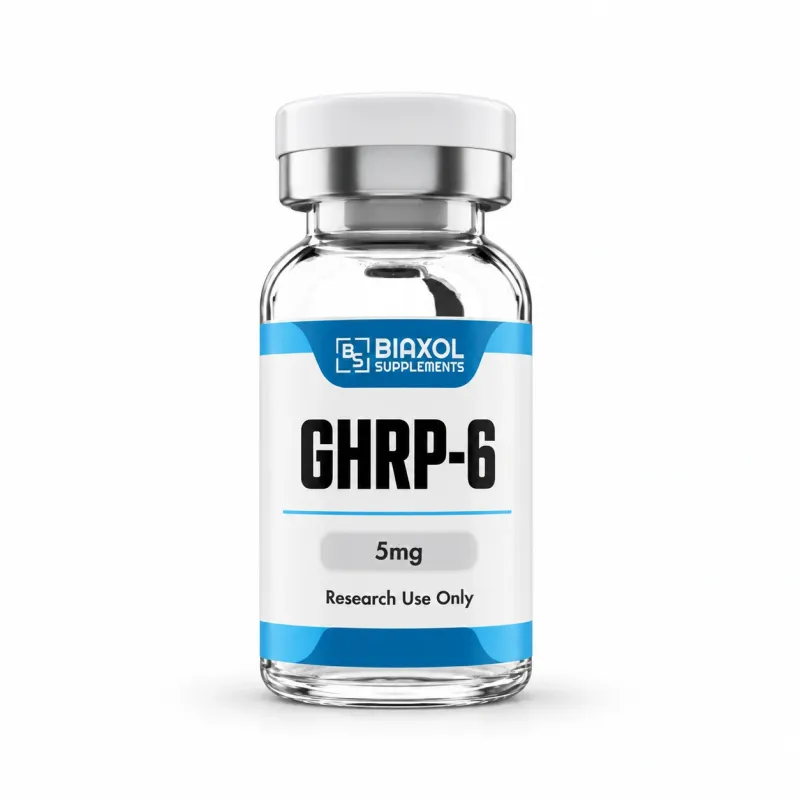
GHRP-6 5mg
GHRP-6 is a synthetic hexapeptide compound studied for selective receptor binding properties and growth hormone secretagogue signalling in experimental models.
The image represents one available format. Strength and pack size are those selected above.
-25% on everything – until October 31
25% off regular prices, replacing other product sales. Only the crypto payment discount can be combined.
Overview
GHRP-6 is a synthetic hexapeptide compound studied for selective receptor binding properties and growth hormone secretagogue signalling in experimental models. The compound consists of six amino acids (His-D-Trp-Ala-Trp-D-Phe-Lys-NH2) and is examined for its interactions with the GHS-R1a (growth hormone secretagogue receptor 1a) in pituitary and hypothalamic research models.
Research applications include GHS-R1a receptor pharmacology, growth hormone secretagogue pathway studies, and comparative hexapeptide secretagogue research relative to structurally related compounds such as GHRP-2.
- High Purity – 99% Purity Guaranteed
- Independently Lab Tested
- Research Grade Quality
- For Laboratory Research Use Only
Properties
| Chemical Formula | C46H56N12O6 |
|---|---|
| Synonyms | Growth hormone releasing hexapeptide, UNII-4H7N4I6X6A, L-Lysinamide, L-histidyl-D-tryptophyl-L-alanyl-L-tryptophyl-D-phenylalanyl- |
| Molar Mass | 873.0 g/mol |
| CAS Number | 87616-84-0 |
| PubChem CID | 9919153 |
| Available formats | GHRP-6 5mg (1 vial) · GHRP-6 5mg KIT (10 vials) |
| Shelf Life | 36 months |
Research
GHRP-6 is a synthetic hexapeptide studied as an agonist of the ghrelin/growth hormone secretagogue receptor (GHS-R1a) in laboratory research models. The compound's six-amino-acid sequence (His-D-Trp-Ala-Trp-D-Phe-Lys-NH2) is studied for selective receptor binding at GHS-R1a sites in pituitary somatotroph cells and hypothalamic nuclei, with downstream research interest in growth hormone secretagogue signalling and IGF-1 axis modulation. Comparative receptor pharmacology research has examined GHRP-6 alongside structurally related hexapeptides including GHRP-2, characterising differences in receptor binding affinity, selectivity profiles, and downstream signalling intensity across the GHRP compound class. Research has also examined GHRP-6's proposed modulation of appetite-regulating pathway signalling through GHS-R1a engagement in gut-expressed receptor models. Independently third-party HPLC-tested; COA available per batch.FAQ
What distinguishes GHRP-6 from GHRP-2 in GHS-R1a receptor research models?
GHRP-6 (His-D-Trp-Ala-Trp-D-Phe-Lys-NH2) and GHRP-2 (D-Ala-D-β-Nal-Ala-Trp-D-Phe-Lys-NH2) are structurally related hexapeptides both studied as GHS-R1a agonists, differing in the first two amino acid positions. Comparative research has examined these structural differences for their effects on receptor binding affinity, selectivity, and downstream signalling intensity, making both compounds standard reference tools in comparative GHRP pharmacology research.
What receptor binding assays are used to characterise GHRP-6's GHS-R1a selectivity profile?
Radioligand displacement assays and cell-based functional assays in GHS-R1a-expressing cell lines — measuring downstream readouts such as intracellular calcium mobilization and cAMP accumulation — are standard methods for characterising GHRP-6's receptor binding affinity and functional potency, typically run in parallel with GHRP-2 and other GHS-R1a reference ligands to establish comparative selectivity profiles.
How does the single vial format compare to the 10-vial KIT format for experimental protocol planning?
The single 5mg vial is suited to pilot studies, individual experimental runs, or protocols with defined single-dose requirements, while the 10-vial KIT format supports larger research programs requiring multiple independent experimental replicates or extended study timelines with consistent inter-vial compound quality. Researchers select format based on total peptide quantity needed across all experimental arms and storage requirements for unused portions.